
Key Takeaways (TL;DR)
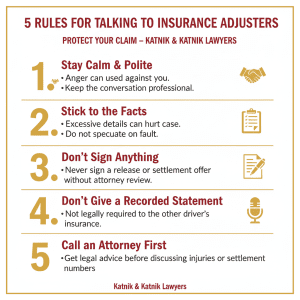
Stick to the facts—never speculate or guess about the accident.
Politely decline recorded statements until you have spoken with an attorney.
Never say you are “fine”—adrenaline often masks serious injuries like whiplash.
Consult an attorney to ensure you are protected under California’s negligence laws.
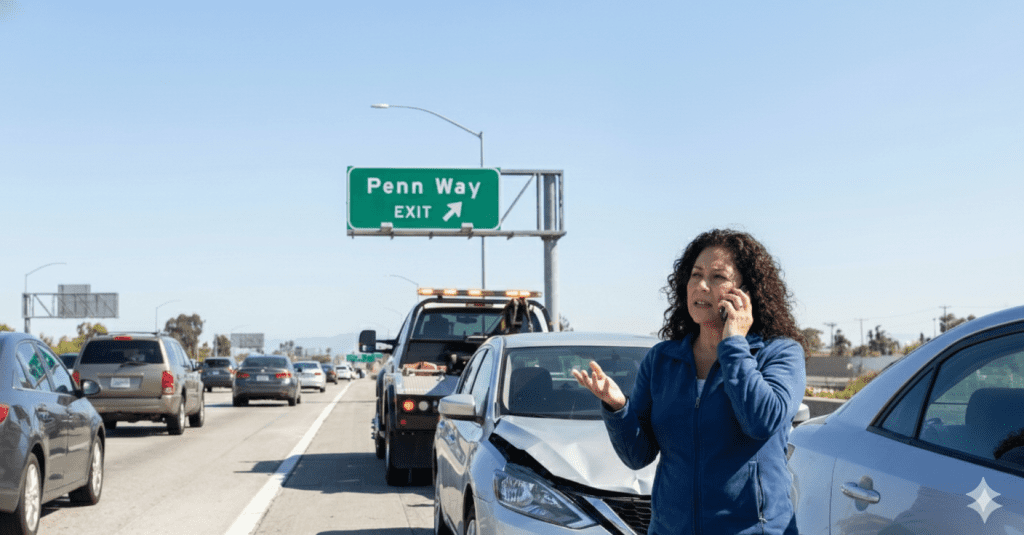
The minutes after a crash on the 5 Freeway or a busy intersection like Bristol Street can feel unreal. When you are talking to adjusters in Santa Ana, those first conversations can set the tone for your entire personal injury case. At Katnik & Katnik Lawyers, we have seen how a single misstep during this process can undermine a fair recovery.
Whether you are dealing with your own carrier or the other driver’s, talking to adjusters in Santa Ana requires discipline and a specific strategy to ensure your rights are protected.
Rule 1: Stick to the Basic Facts
When talking to adjusters in Santa Ana, discipline is your best protection. They will try to get you to speculate about who was at fault or the speed of the vehicles. California law follows “comparative negligence,” meaning if the insurance company can shift even a small percentage of fault to you, your compensation is reduced.
Share only what you know for certain:
Location: “The accident happened at Bristol Street and McFadden Avenue.”
Time: “It was Tuesday at 5:30 PM.”
Type: “I was rear-ended while stopped at a red light.”
Rule 2: Politely Decline Recorded Statements
Many drivers assume they are legally required to provide a recorded interview immediately. However, when talking to adjusters in Santa Ana, you should know that California law does not require you to give a recorded statement to the other driver’s insurance company.
These recordings are often used to “lock you in” to a version of events before you have all the facts. Adjusters may ask leading questions to get you to admit partial fault or downplay your pain. If you are asked to go on the record, simply say: “I am not prepared to provide a recorded statement at this time, but I am happy to provide the basic facts of the accident.”
Rule 3: Avoid "Polite" Health Fillers
When talking to adjusters in Santa Ana, the common courtesy of saying “I’m fine” can be used against you. Adjusters often document these “polite fillers” as proof that you weren’t actually injured.
Adrenaline from a crash on the 5 Freeway or PCH can mask pain for hours or even days. Under California law, you have a duty to report accidents involving injury, but you are not a doctor—do not diagnose yourself over the phone. You can find more information on official reporting requirements at the California DMV Accident Reporting site.
- Whiplash: Neck stiffness that often appears 24–48 hours later.
- Concussions: Dizziness or confusion that may be masked by adrenaline.
- Internal Injuries: Pain that stays hidden until inflammation sets in.
- Back Pain: Spinal injuries that worsen days after the initial impact.
Rule 4: Why Talking to Adjusters in Santa Ana Requires Legal Counsel
After the initial facts are shared, an adjuster may pivot to “liability” questions. They might ask, “Do you think you could have braked sooner?” or “What is your desired settlement amount?”
Do not provide these answers. Under California’s pure comparative negligence rules, any admission—even a small one—can be used to slash your compensation. Politely inform them: “I am focusing on my medical recovery. Please direct all legal or settlement discussions to my attorney at Katnik & Katnik.” This protects you from accidentally signing away your rights for a “nuisance settlement” that won’t cover your future medical needs.
Rule 5: Identify Lowball "Swoop and Settle" Offers
The Santa Ana Evidence Checklist
- Police Report: Obtain the report number from SAPD or CHP.
- Witness Info: Collect names and phone numbers immediately.
- Scene Photos: Document vehicle damage, skid marks, and traffic signs.
- Medical Records: Keep every ER and follow-up treatment document.
In Santa Ana, many drivers are underinsured. We can help you check your own “Uninsured Motorist Coverage” (UM) to see if your own policy will pay for your medical bills and car repairs.
Generally, California has a two-year statute of limitations for personal injury. However, if a government vehicle was involved (like a city bus), that window can shrink to just six months.
Ready to Protect Your Claim?
Don’t let insurance adjusters pressure you into a quick, unfair settlement. At Katnik & Katnik Lawyers, we handle the negotiations so you can focus on your recovery.
This blog post is for informational purposes only and does not constitute legal advice or an attorney-client relationship.
