
5 Proven Benefits of an Effective Return to Work Strategy
Workplace injuries can disrupt lives and businesses in an instant.
While many employers focus on prevention, it is just as critical to have a plan for what happens after an accident occurs. For companies in California, implementing an effective return to work strategy is not just a matter of compliance; it is a compassionate and intelligent business decision that benefits everyone involved.
When an employee is injured on the job, the path to recovery can be filled with uncertainty. A well-designed return to work strategy provides a clear, supportive framework to help them transition back to their role safely and efficiently. At Katnik & Katnik Lawyers, we have seen how proactive employers can minimize the impact of an injury, fostering a culture of trust and support that protects both their team and their bottom line. This article explores five proven benefits of having a robust plan in place.
The Reality of Workplace Injuries in California
According to the Occupational Safety and Health Administration (OSHA), millions of U.S. workers suffer a job-related injury or illness each year. In California’s diverse and often high-risk industries, from construction to manufacturing, these incidents are a serious reality. The consequences extend beyond physical pain, creating financial distress for the employee and significant operational challenges for the employer.
An injured worker’s absence can lead to lost productivity, increased strain on other team members, and a decline in overall morale. For the injured employee, time away from work brings questions about career stability and financial security. A proactive return to work strategy directly addresses these challenges by creating a collaborative and structured process for recovery and reintegration.
What Is a Return to Work Strategy?
A return to work strategy is a formal policy that helps employees who have been injured on the job return to productive employment as soon as it is medically safe. Rather than waiting for a full recovery, which can sometimes take months or years, this approach focuses on identifying suitable, modified duties that the employee can perform during their recovery period. It involves collaboration between the employer, the injured worker, their healthcare provider, and sometimes legal counsel to ensure the transition is safe, fair, and compliant with state and federal laws.
Benefit 1: Reduces Financial Strain for Everyone
One of the most immediate concerns after a workplace injury is financial stability. An injured employee who cannot work faces the stress of lost wages, while the employer may face rising insurance premiums and costs associated with hiring temporary staff. An effective return to work strategy mitigates these financial burdens.
By enabling an employee to return to modified or light-duty work, they can continue to earn a paycheck, reducing their dependence on workers’ compensation benefits alone. This sense of financial security is crucial for their mental and emotional well-being during recovery. For the employer, keeping an experienced employee on the payroll, even in a limited capacity, is often more cost-effective than managing a prolonged absence.
Benefit 2: Boosts Employee Morale and Loyalty
How a company treats its employees during difficult times speaks volumes about its values. When an employer provides genuine support, encouragement, and resources to an injured worker, it fosters a powerful sense of loyalty. Employees who feel cared for are more motivated to return and contribute to the company’s success.
This positive experience extends to the entire workforce. When other employees see their colleague being treated with respect and compassion, it boosts team morale and reinforces the company’s reputation as a great place to work. A supportive return to work strategy demonstrates that the employer views its workers as valuable individuals, not just numbers on a spreadsheet.
Benefit 3: Retains Valuable Talent and Skills
Experienced employees possess institutional knowledge and skills that are difficult and expensive to replace. A prolonged absence increases the risk that an injured worker will become disconnected from the company and may not return at all. This forces the employer to recruit, hire, and train a replacement, which is a costly and time-consuming process.
A return to work strategy keeps the injured employee engaged and connected to the workplace. By accommodating their recovery with modified duties, the company retains their expertise and ensures a smoother transition back to their full responsibilities once they have recovered. This continuity is essential for maintaining operational stability and preserving a talented workforce.
Benefit 4: Minimizes Productivity Loss
When an employee is out on leave, their work must either be absorbed by other team members or put on hold. This can lead to decreased productivity, missed deadlines, and burnout among the remaining staff. While bringing an injured worker back for light duty may not restore full productivity immediately, it significantly reduces the overall impact.
Even in a modified role, the employee can handle tasks that alleviate the burden on their colleagues, contributing to team goals and keeping projects moving forward. This approach helps maintain a more balanced workload across the team and minimizes the disruptions caused by the employee’s absence.
Benefit 5: Lowers Workers’ Compensation Costs
A successful return to work strategy is one of the most effective ways for an employer to control workers’ compensation costs. Insurance premiums are heavily influenced by the frequency and duration of claims. When employees return to work sooner, even in a modified capacity, it can reduce the amount paid out in wage replacement benefits.
Over time, consistently applying a return to work program can lead to a lower experience modification rate (E-Mod), which directly translates to lower insurance premiums. By demonstrating a commitment to getting employees back to work safely, employers can achieve significant long-term financial savings while fostering a safer and more supportive work environment.
How to Build an Effective Return to Work Strategy
Creating a successful program requires a thoughtful and well-rounded approach. The U.S. Department of Labor suggests several key considerations for employers:
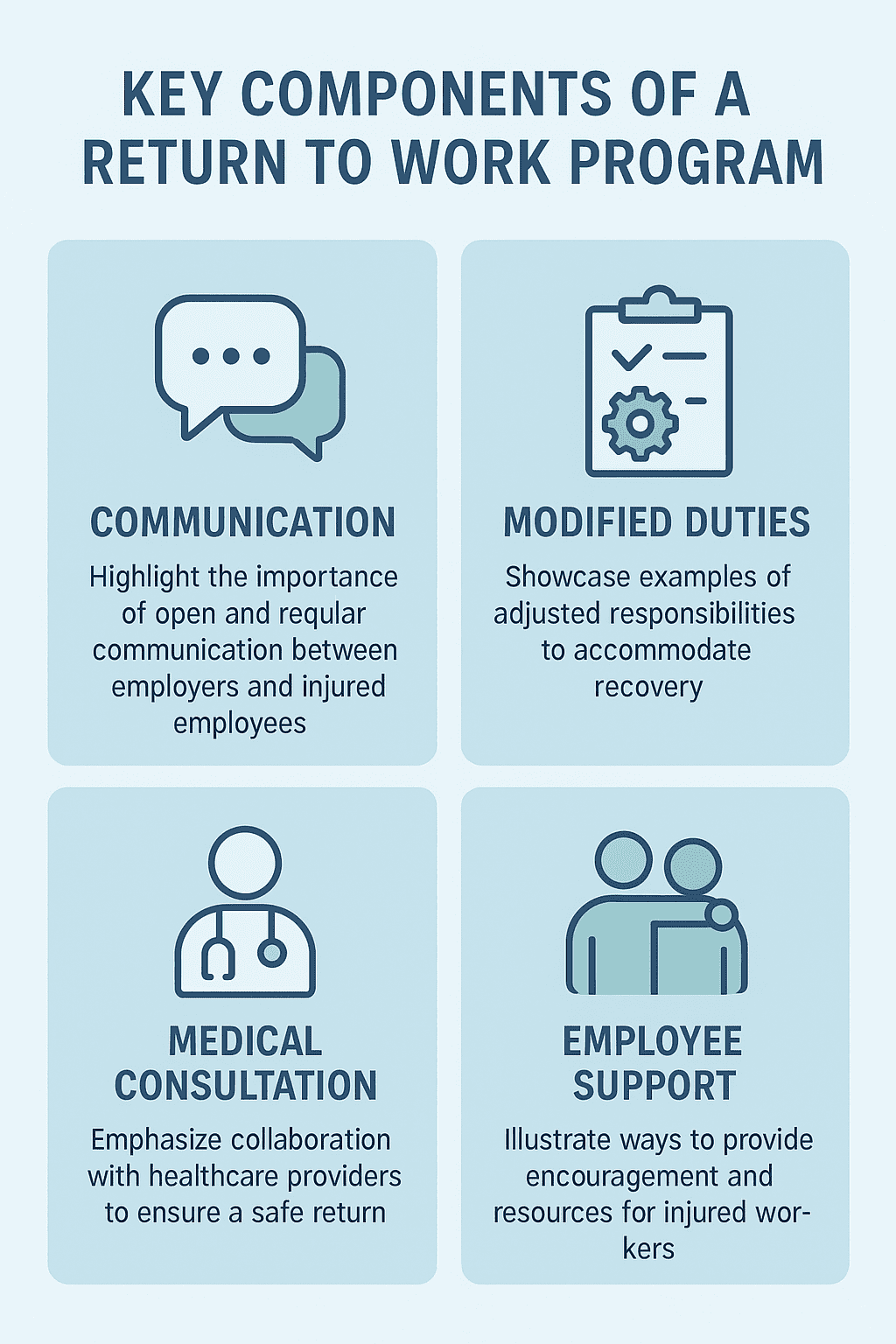
- Offer Alternative Labor Options: Be flexible and creative. This could include telecommuting, offering adjusted schedules, or modifying job responsibilities to accommodate medical restrictions.
- Maintain Open Communication: Stay in regular contact with the injured employee. Express your support and keep them informed about their role and the company.
- Formalize the Policy: Develop a written return to work strategy and communicate it to all employees. Ensure everyone understands the process and the company’s commitment to supporting injured workers.
- Collaborate with Medical Providers: Work with the employee’s doctor to understand their limitations and identify appropriate modified tasks.
Partner with Experienced Legal Counsel
Navigating a workplace injury involves complex legal and medical considerations. At Katnik & Katnik Lawyers, we have dedicated over 65 years to assisting injured workers in Orange County. We understand that a successful recovery hinges on support from all sides. For employers, implementing an effective return to work strategy is a crucial step in fulfilling their duty of care. For employees, it is a lifeline that provides stability and purpose during a challenging time.
If you are an injured worker facing uncertainty about your return to work, contact us for a free, confidential consultation. We are here to ensure your rights are protected every step of the way.